Sheriff's Office Defends Flock Camera Use as Courts and Congress Weigh License Plate Privacy
Indiana has no state law governing automated license plate readers or the data they collect.
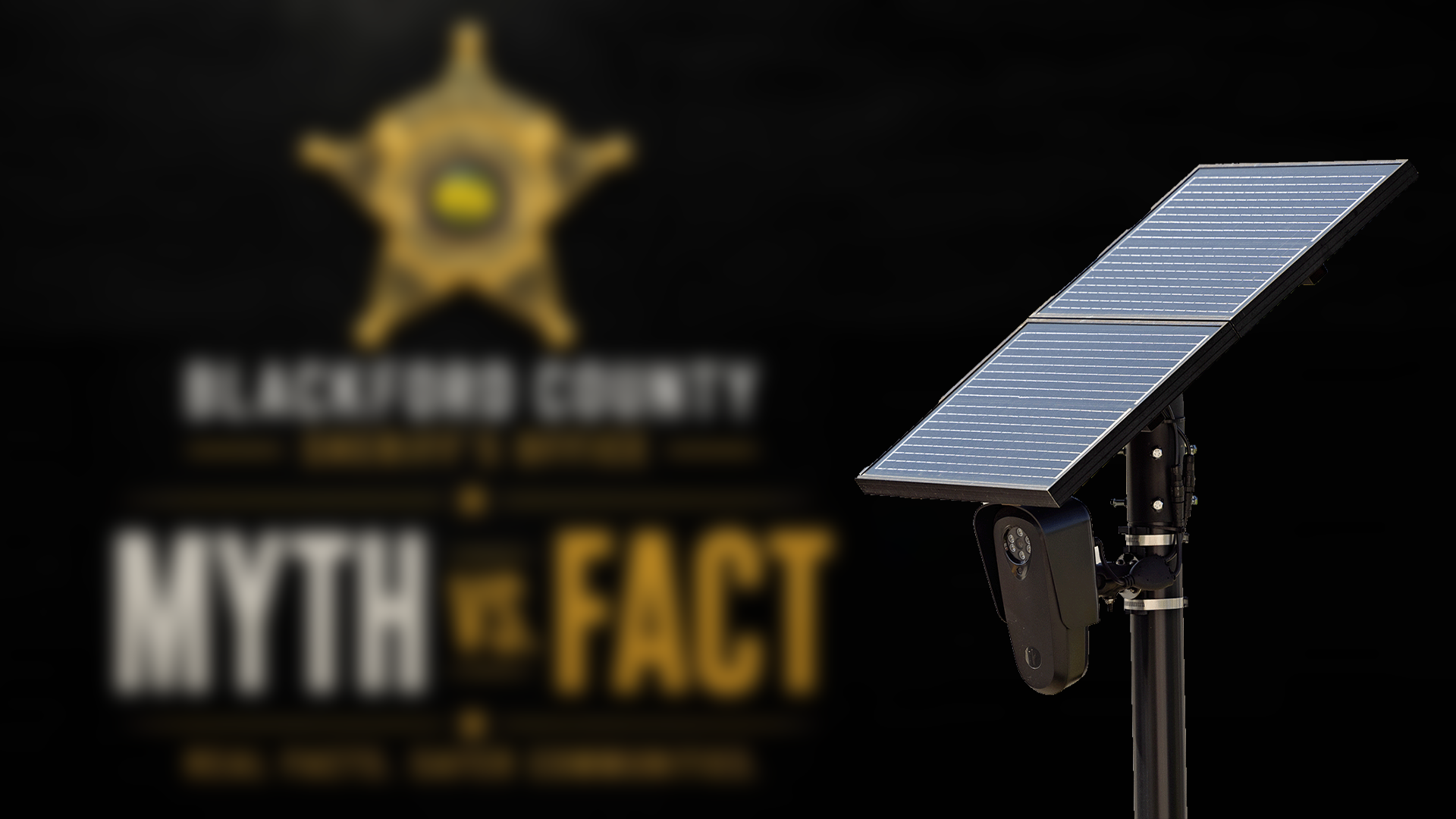
The Blackford County Sheriff's Office has posted a public statement on Facebook defending its use of Flock cameras, the automated license plate readers that photograph and log passing vehicles.
The post laid out the situations the office says prompt a search of the camera system. It listed missing or abducted children, missing or endangered adults, murder investigations, stolen vehicles, burglary and theft, violent crimes, hit-and-run crashes, and wanted fugitives. The office said its goal is to make the county safer, not to track law-abiding residents.
The office said its deputies do not search the system out of curiosity. It said access is restricted, searches must be tied to a legitimate law enforcement purpose, and the system keeps audit logs. "Misuse is not tolerated," the post said.
The statement used a "myths vs. facts" format to answer two common objections.
To the concern that the office is tracking everyone's movements, the post said the office is "not interested in tracking law-abiding citizens." It said the overwhelming majority of vehicles captured by the cameras are never looked at, and that investigators search the system only when there is a legitimate law enforcement purpose.
To the concern that the cameras violate the Fourth Amendment, the post said a license plate is displayed in public and can be seen by any passing motorist or officer. It said an officer may legally observe and write down a plate number from a public place, and that "Flock simply automates what an officer could already lawfully observe." The post stated there is "no reasonable expectation of privacy in a license plate displayed on a public roadway."
What the courts have said
Courts have largely accepted that reading so far. In January, a federal judge in Virginia ruled in favor of the City of Norfolk in a lawsuit that challenged its network of about 176 Flock cameras. The judge found that photographing plates on a public road and storing them in a searchable database does not amount to a warrantless search. The residents who brought the case, represented by the Institute for Justice, said they would appeal. The judge also wrote that the analysis could shift as surveillance technology expands.
The U.S. Supreme Court addressed location privacy in a separate case in June (2026). In Chatrie v. United States, decided June 29, the Court ruled 6 to 3 that police conduct a search under the Fourth Amendment when they obtain a person's cellphone location data, even when a company such as Google holds it. The Court rejected the argument that pulling a small, time-limited slice of a large database avoids that protection. Legal observers have said the reasoning could shape how courts view license plate camera networks, including the Norfolk appeal.
A national debate
The cameras have drawn scrutiny across the country. Reporting by the technology outlet 404 Media found that local officers ran thousands of Flock searches on behalf of federal immigration agents, and that a Texas officer searched cameras nationwide for a woman in connection with a self-managed abortion. Members of Congress opened an investigation into the company. Cities including Austin, Texas, and Evanston, Illinois, have canceled their Flock contracts, citing privacy concerns and documented misuse.
Flock has said it made changes to its platform in response, including new limits on which agencies can search data across state lines.
No Indiana law
Indiana has no state law governing automated license plate readers or the data they produce. Some states have passed such laws. Illinois bars the use of plate data for immigration or abortion investigations. Virginia limits how long the data can be kept. Indiana has enacted no comparable statute.
That absence means the safeguards the Sheriff's Office describes — restricted access, audit logs, and searches tied to a law enforcement purpose — rest on department practice and the vendor's own controls, not on state law.
This topic is highly contentious across the United States, and will continue to evolve as the technology and discussions continue to grow. The Blackford Ledger is committed to continuing to cover Flock cameras and their use around Blackford County and the discussion from a national level.
About our reporting: The Blackford Ledger builds its government coverage from official public records, and every report is reviewed by an editor before publication. Read our Editorial Policy & Corrections or request a correction.