In Blackford County, We're Quick To Act, Slower To Regulate
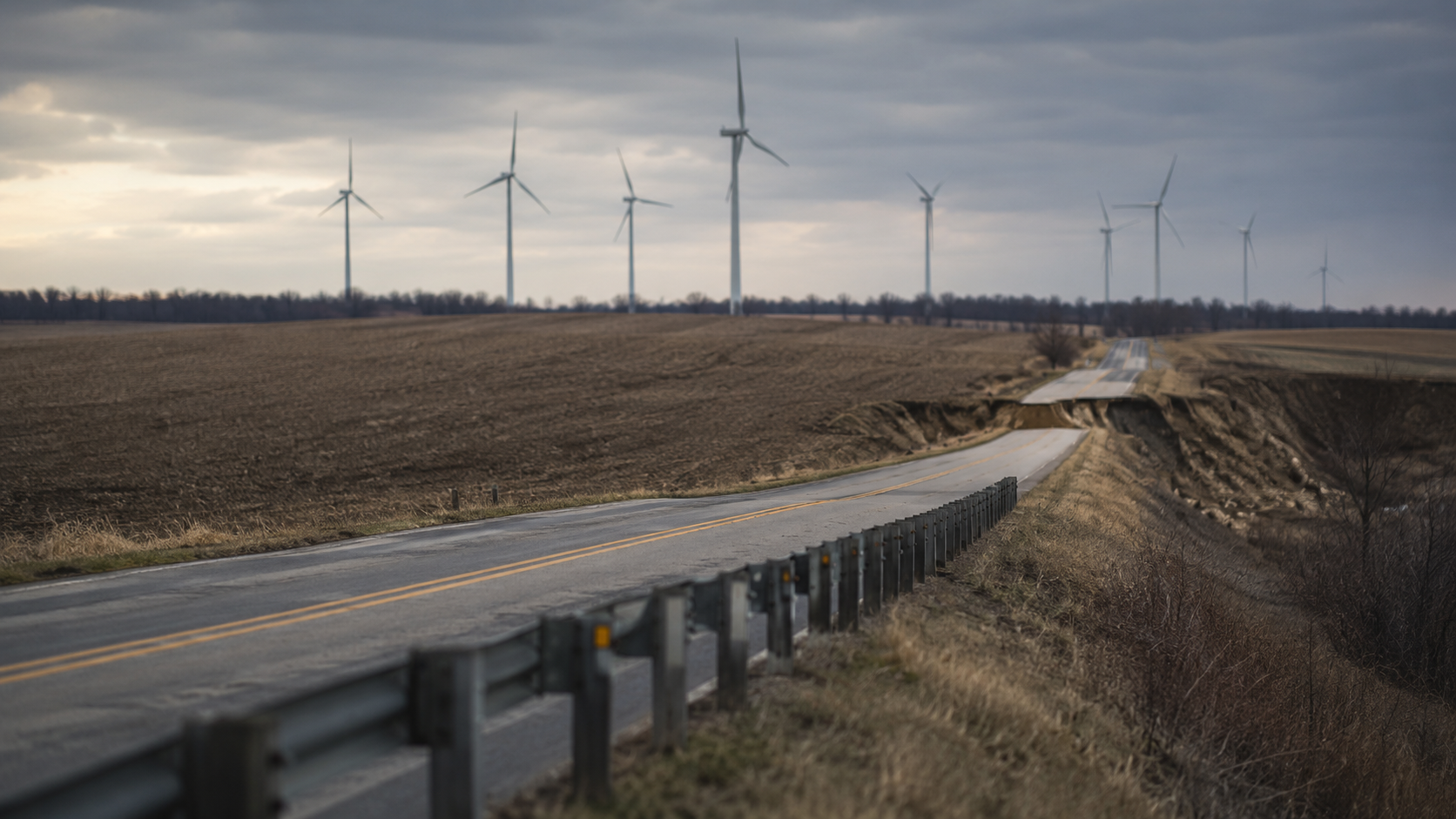
The county set its Phase 2 wind standards through a private contract. It has no public policy for its license plate cameras. Its zoning has no rules for data centers — and the boards that would write them have not met in months.
When Blackford County approved the Prairie Creek Phase 2 wind project this summer, it did not update its wind ordinance through the public process state law lays out. It set the project's standards through the contract instead, calling these changes "provisions." The legalities of this are still up for debate, but process is becoming obvious to see.
The county signed an Economic Development Agreement, or EDA, with a subsidiary of RWE Renewables on July 8. Attached to that contract was an eight-page exhibit, Exhibit G. As the Ledger reported, Exhibit G changed more than 30 provisions of the county's wind energy ordinance.
Some of those changes made the rules stricter for the developer. Others appeared to loosen them. One sentence jumps the legal-procedure gun: the exhibit's preamble, which states its provisions "shall be read as amending" the county zoning ordinance.
Warren Brown, executive director of the Blackford County Economic Development Corporation, told the Ledger that language was not accurate. He said the provisions were contract terms, not amendments. "There was no ordinance amended," Brown said.
Brown said the provisions came from a draft revision of the wind ordinance. That draft was presented to Hartford City, was not adopted, and has remained under review by the county's Area Plan Commission. Brown said the county put the provisions into the private contract rather than wait for the draft to move through the normal adoption process.
Commissioner Dan Borgenheimer, who signed the EDA and also serves as president of the economic development corporation's board, described the provisions the same way. He said they were meant in part to "give credit to the folks that spent all that time developing that revised ordinance."
The Ledger asked independent Indiana attorneys and the state's Public Access Counselor whether setting these standards by contract, rather than by ordinance amendment, followed state law. Each declined to comment. The question remains unresolved.
The draft revision of the ordinances has still not been adopted, and most are unable to see what changes they even hold. Every scheduled meeting of the county's Area Plan Commission has been cancelled since February. Every scheduled meeting of the Board of Zoning Appeals has been cancelled since March. The rules meant to govern wind projects in Blackford County are still unfinished. But the county is moving forward with exceptions to our current rules for projects that press the necessity of time.
A second gap, with no rule at all
The county faces a similar gap with a different technology.
The Blackford County Sheriff's Office and the Hartford City Police Department use Flock cameras, which photograph and log the license plates of passing vehicles, as well as physical characteristics of those vehicles. In a public statement posted to Facebook, the Sheriff's Office defended the cameras as a tool used only for legitimate investigations.
Indiana has no state law governing these cameras or the data they collect. The Ledger has found no adopted local policy in Blackford County or Hartford City setting rules for who may search the data, for what reasons, or how long it is kept.
Without state laws, zoning ordinances or even departmental policies to control the use of the data from these recording devices, reprimanding an official that oversteps the use of this technology will likely have no legal footing and can be challenged.
The next test
The next test may already be visible.
Blackford County's zoning ordinance, last revised in November 2023, does not define "data center." Section 211 of the ordinance prohibits any use that is not listed. A data center is not listed, but these projects have been known to try to consider themselves under the regulations of "industrial warehouses" or other such projects in other counties that lack ordinance guidance related to data center terminology.
County officials have said data center proposals are on hold until the zoning ordinance is updated to address them. To-date, The Ledger is uncertain if any "data center" specific language has been drafted.
The boards that would adopt that language are the same boards that have not met since winter.
The wind rules came after the wind project. The camera rules have not come at all. The data center rules are unfinished, and the Area Plan Commission and Board of Zoning Appeals have not met in months.
If a data center project comes to Blackford County before that work is done, the county will face the same choice it faced with Phase 2: whether to wait for the public process, or to move the project forward without it.
There is a need to progress Blackford County - to prosper. And proper regulation is meant to guide sustainable, healthy growth. Legislative activities in the county, however, have seemed to hit a wall.
About our reporting: The Blackford Ledger builds its government coverage from official public records, and every report is reviewed by an editor before publication. Read our Editorial Policy & Corrections or request a correction.