Hartford City Police Adopt a Written Policy for Their Flock Cameras
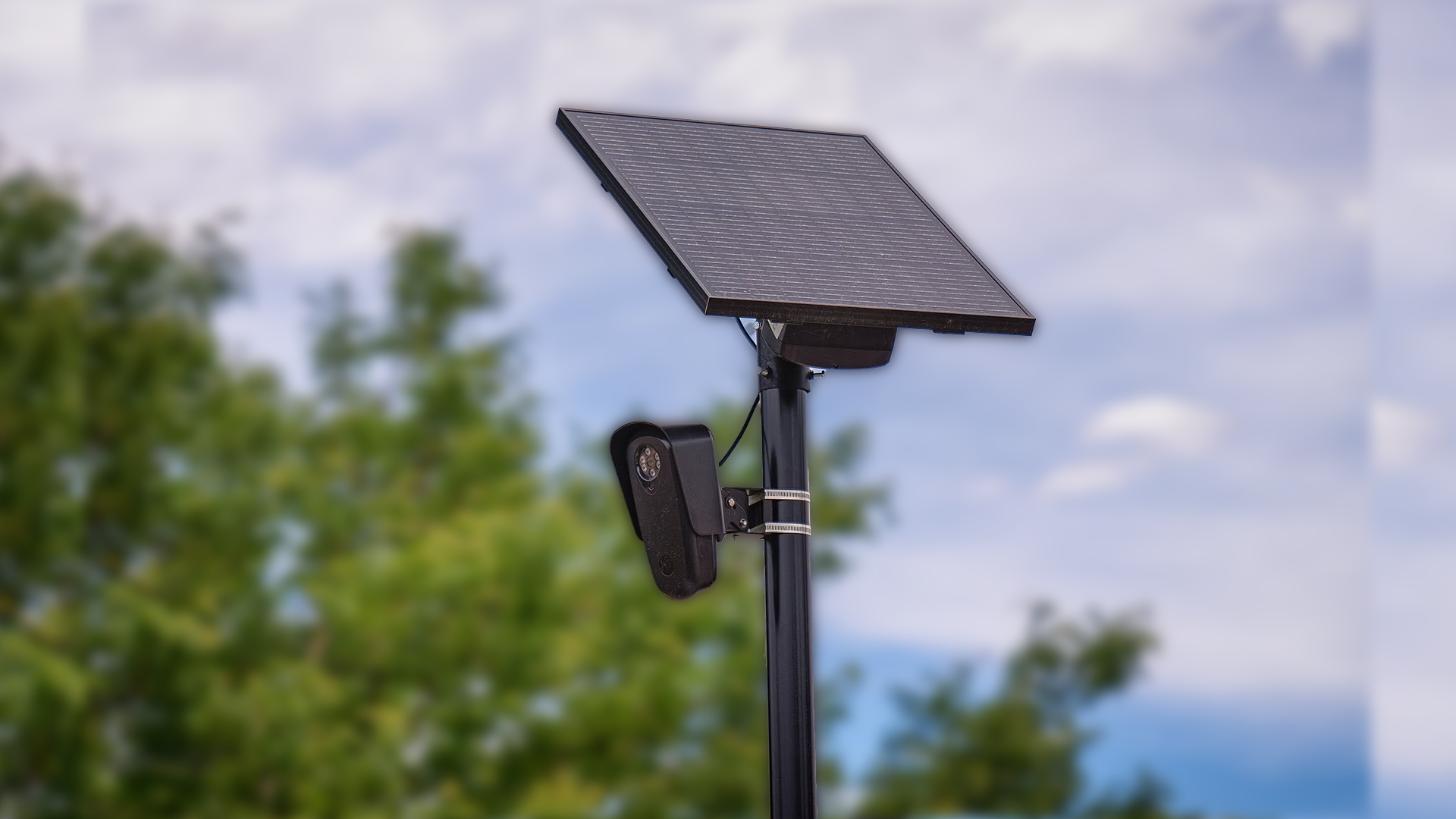
The Hartford City Police Department has adopted its first written policy governing its use of Flock automated license plate recognition cameras.
The policy, titled Enforcement Rule 40, was signed by Police Chief Cody Crouse and approved August 3. It took effect August 4. The Hartford City Board of Public Works authorized it.
Indiana has no state law requiring a local ALPR policy, and neither the city nor Blackford County had previously published one. The department adopted this one on its own.
The Ledger obtained a copy of Enforcement Rule 40 and reviewed it for this article.
The cameras photograph and log passing vehicles and compare them against law enforcement databases. The Ledger has previously reported that they had been operating locally without any published rule governing who could use them, for what purpose, or for how long. Enforcement Rule 40 is the first local framework for that use.
What the policy sets
The policy opens by naming its own limits. It states that ALPR technology is to be used "solely for legitimate law enforcement purposes" and "shall not be used for general surveillance of individuals engaged in lawful activity." It states that every user is accountable for every search.
Access is limited. Only sworn officers, investigators, communications staff, crime analysts, and others the chief authorizes may use the system. Each user gets an individual login. Password sharing is prohibited. Access ends when a user leaves or loses authorization.
Training comes before any individual is provided access. Users must complete department training that covers constitutional law, the Fourth Amendment, state privacy laws, civil rights protections, data security, and audit procedures before they can use the system.
The policy lists uses it forbids. The system may not be used to monitor people based on race, ethnicity, religion, gender, sexual orientation, or political affiliation. It may not be used to monitor lawful demonstrations without a criminal purpose. It may not be used for personal reasons, to locate family, friends, neighbors, or public figures without lawful justification, or to assist private investigations.
Those prohibitions track the misuse that has drawn national attention. Reporting elsewhere has documented non-Hartford City officers using Flock networks to search for a woman who had an abortion and to assist federal immigration agents. Enforcement Rule 40 bars those categories of search.
The policy attaches consequences. A violation may lead to retraining, suspension, loss of access, termination, criminal prosecution, or civil liability.
The policy treats alerts as leads. An ALPR alert is "an investigative lead only." Before acting on one, officers should verify the plate, state of registration, make, model, and color, and should visually confirm the vehicle before a stop.
It limits sharing. ALPR information may be shared only with criminal justice agencies, prosecuting attorneys, and courts, and may not be released to unauthorized persons except as required by law.
What the policy leaves open
The policy does not state how long ALPR data is kept. It says records will be retained "consistent with" state law, department retention schedules, contractual agreements, and investigative need, and that the department will periodically review the period. As of current, there is no state law designating how long ALPR data can be retained. Flock's newly listed default data retainment is 7 days, though there are ways to increase it.
Searches must include a case number, investigative purpose, and officer identification "whenever practical." Officers should verify alert details "when possible." The qualifier "whenever practical" allows searches to be run without full documentation.
The department "shall conduct periodic audits ... at the discretion of the Chief of Police." The policy sets no audit schedule, names no outside reviewer, and does not require that audit results be reported to anyone outside the department. The audits are internal.
The section on public transparency says the department "may" publish the policy, "may" report aggregate usage statistics, and "may" answer community questions. Each measure is permissive but not stating as required.
The list of authorized uses ends with an open clause. Alongside specific uses such as Amber Alerts and stolen-vehicle recovery, the policy permits "any law enforcement purpose deemed necessary by the Chief of Police."
The policy does not address the national network. It limits deliberate sharing to criminal justice agencies. It says nothing about whether the department's cameras feed Flock's national lookup system, whether agencies in other jurisdictions can search Hartford City's data, or whether local users can search other jurisdictions' cameras.
A step taken in good faith
No state law told the Hartford City Police Department to write these rules. No county ordinance required it. The department could have kept running its Flock cameras the way it had been, with no public standard to answer to. It chose instead to put one in writing, sign it, and make it the rule its own officers must follow.
Automated license plate readers are a contested technology, and many departments have brought them into their communities with little public explanation. By adopting Enforcement Rule 40, Chief Cody Crouse and the department have set down, on the record, the limits they intend to hold themselves to.
Enforcement Rule 40 took effect August 4. It is the first published account of how the department says it will use its Flock cameras, and it can be revisited and strengthened as the technology, and the community's questions, continue to evolve. Adopting a policy where none was required is a signal of good faith, and a foundation the department can build on.
About our reporting: The Blackford Ledger builds its government coverage from official public records, and every report is reviewed by an editor before publication. Read our Editorial Policy & Corrections or request a correction.